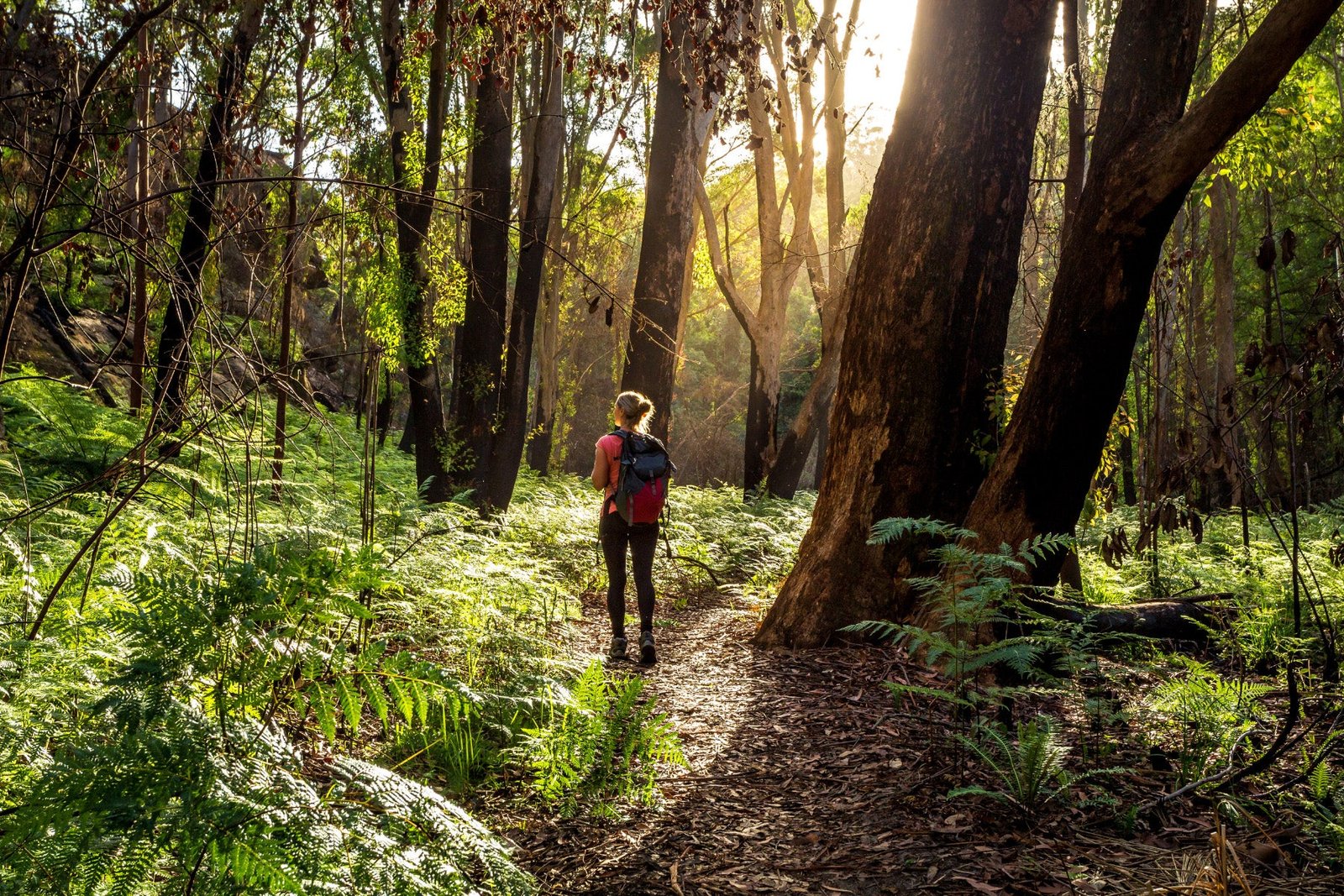
A growing body of research shows that regularly spending time around trees provides a wide range of human health benefits, from lowering stress to improving cognition to boosting longevity, according to experts.
In a September 8, 2021, interview on WBUR’s Radio Boston, Peter James, assistant professor in Harvard T.H. Chan School of Public Health’s Department of Environmental Health, said that trees’ effects on us “translate into long-term changes in the incidence of depression, anxiety, cognitive decline, and chronic diseases including cardiovascular disease and cancer.”
Trees eat the greenhouse gases that cause climate change—for breakfast.
More like breakfast, lunch and dinner. Trees’ food-making process, photosynthesis, involves absorbing carbon dioxide from the air and storing it in its wood. Trees and plants will store this carbon dioxide throughout their lives, helping slow the gas’s buildup in our atmosphere that has been rapidly warming our planet.
Trees boost our mental health while raising our physical health.
A healthy tree can lead to a healthy you and me. A study by a TNC scientist shows that time in nature—like a walk among the trees in a city park—correlates with a drop in anxiety and depression.
The good news: it doesn’t take a lot of time in nature for these soothing powers to kick in. You may have felt the benefits from a short walk or hike in your neighborhood. We’re drawn to green spaces, and for good reason.
Trees clean the air so we can breathe more easily.
Leave it to leaves. Trees remove the kind of air pollution that is most dangerous to our lungs: particulate matter. This pollution arises from the burning of fossil fuels, and can reach dangerous concentrations in the largest cities as well as in neighborhoods near highways and factories.
Tree’s leaves will filter this dangerous pollution, but only if they’re planted near the people who need them; most of the filtration occurs within 100 feet of a tree. More trees in cities, especially in lower-income neighborhoods close to highways and factories, can reduce ailments like asthma and heart disease that cause 5% of deaths worldwide.
Trees give a home to the wildlife we love.
From our windows, many of us can see how much our feathered and furry neighbors enjoy their ‘high-rise apartments.’ Even a single tree can provide vital habitat for countless species.
An intact forest can do even more, creating a home for some of the most diverse and resilient webs of life on the planet. Old-growth forests, the forests that we need to protect most urgently, create habitat at the ground level, at the top of their tree canopies, and everywhere in between.
Trees cool down your life, and could even save it.
Trees give us all shade—and that’s a good thing! Temperatures are rising and heatwaves are getting longer due to climate change. Some places feel the heat more than others. Neighborhoods with lots of pavement absorb more heat and can be five to eight degrees hotter than surrounding areas. These areas also stay hotter later into the night, which is detrimental to our health.
Trees filter your water, making your drinking supply cleaner and more reliable.
Raise a glass to a tree near you! Actually, raise your glass to trees far from you, as your water has traveled on a long journey to your faucet. Trees store and filter more than half of the water supply in the United States.
Societal Impact Statement
Trees play a critical role for people and the planet. Numerous studies have demonstrated that the presence of trees and urban nature can improve people’s mental and physical health, children’s attention and test scores, the property values in a neighborhood, and beyond. Trees cool our urban centers. Trees are essential for healthy communities and people. The benefits that trees provide can help cities and countries meet 15 of the 17 internationally supported United Nations Sustainable Development Goals. This critical review provides a comprehensive argument that trees should be considered an important part of the equation by project managers and civic leaders as we collectively work toward reaching these sustainability goals.
Exposure to forests boosts our immune system. While we breathe in the fresh air, we breathe in phytoncides, airborne chemicals that plants give off to protect themselves from insects. Phytoncides have antibacterial and antifungal qualities which help plants fight disease. When people breathe in these chemicals, our bodies respond by increasing the number and activity of a type of white blood cell called natural killer cells or NK. These cells kill tumor- and virus-infected cells in our bodies. In one study, increased NK activity from a 3-day, 2-night forest bathing trip lasted for more than 30 days. Japanese researchers are currently exploring whether exposure to forests can help prevent certain kinds of cancer.
Spending time around trees and looking at trees reduces stress, lowers blood pressure and improves mood. Numerous studies show that both exercising in forests and simply sitting looking at trees reduce blood pressure as well as the stress-related hormones cortisol and adrenaline. Looking at pictures of trees has a similar, but less dramatic, effect. Studies examining the same activities in urban, unplanted areas showed no reduction of stress-related effects. Using the Profile of Mood States test, researchers found that forest bathing trips significantly decreased the scores for anxiety, depression, anger, confusion and fatigue. And because stress inhibits the immune system, the stress-reduction benefits of forests are further magnified.
Green spaces in urban areas are just as important as rural forests. About 85% of the US population lives in suburban and urban areas and may not have access to traditional rural forests. That’s O.K. Gardens, parks and street trees make up what is called an urban and community forest. These pockets of greenspace are vitally important because they are the sources of our daily access to trees.
Spending time in nature helps you focus. Our lives are busier than ever with jobs, school, and family life. Trying to focus on many activities or even a single thing for long periods of time can mentally drain us, a phenomenon called Directed Attention Fatigue. Spending time in nature, looking at plants, water, birds and other aspects of nature gives the cognitive portion of our brain a break, allowing us to focus better and renew our ability to be patient.
In children, attention fatigue causes an inability to pay attention and control impulses. The part of the brain affected by attention fatigue (right prefrontal cortex) is also involved in Attention-Deficit/Hyperactivity Disorder (ADHD). Studies show that children who spend time in natural outdoor environments have a reduction in attention fatigue and children diagnosed with ADHD show a reduction in related symptoms. Researchers are investigating the use of natural outdoor environments to supplement current approaches to managing ADHD. Such an approach has the advantages of being widely accessible, inexpensive and free of side effects.
Patients recover from surgery faster and better when they have a “green” view. Hospital patients may be stressed from a variety of factors, including pain, fear, and disruption of normal routine. Research found that patients with “green” views had shorter postoperative stays, took fewer painkillers, and had slightly fewer postsurgical complications compared to those who had no view or a view of a cement wall.
Leave a Reply