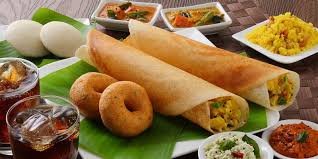
South Indian cuisine usually encompasses the five Southern states of Karnataka, Andhra Pradesh-Telangana, Tamil Nadu, Kerala, and Goa. Both the geography and culture of the South influence the region’s cuisine. As with most countries, there are large regional differences and each state’s cuisine can vary greatly even within a specific state.
Idli
Idli, a round shaped steamed rice-lentil cake, is one of the healthiest breakfast item of Indian Cuisine and staple food of South Indians. It is prepared by steaming the batter made of short-grain rice and protein rich urad dal and its preparation doesn’t require use of cooking oil apart from greasing the idli moulds in which batter is poured to give it a round disc shape. There are many varieties of idli; rice idli, rice rava idli, poha idli (aval idli), instant rava idli, ragi idli, oats idli etc., are some its examples. This step by step photo recipe of Idli explains how to make traditional rice idli from rice and urad dal batter using Idli steamer. Idli is specifically loved because of its milky white color and soft and spongy texture and both of these characteristics greatly depend on how its batter is prepared. This rice idli recipe explains how to make idli batter with right consistency and how to determine whether its fermented properly or not to make soft and spongy idli in great detail. Additionally, this recipe also covers how to make idli using pressure cooker (without idli steamer).
Dosa
Rice and wheat are the top two grains consumed by Indians, with rice topping the list. Indians have taken this humble grain and transformed it into a plethora of sweet and savory dishes unlike any other culture in the world. The humble dosa is an ode to the never-ending love between the people of this country and rice.
Dosa is the ever-popular South Indian breakfast of crispy crepes made with fermented rice and lentil batter. It
is usually poured into a thin crispy crepe and served with a side of mashed spiced potatoes, lentil stew called sambar, and coconut chutney.
Vada
Vada is a category of savory fried snacks from India. Different types of vadas can be described as fritters, cutlets, donuts, or dumplings. Alternative names for this food include wada, vade, vadai, wadeh, and bara.
Vadas are legume based. The legumes (dal) are soaked in water and then ground to a batter. The batter is then seasoned with other ingredients, such as cumin seeds, onion, curry leaves (sometimes previously sautéed), salt, chilies, or black pepper grains.
Often ginger and baking soda are added to the seasoning in shops to increase the fluffy texture and improve fermentation for large batches. The mixture is then shaped and deep-fried, resulting in vadas with crispy skin and a fluffy center. They are usually referred to as the savory donuts of the south.
Appam
Appam is a type of pancake, originating from South India, made with fermented rice batter and coconut milk, common in Kerala, Sri Lanka, and Tamil Nadu. It is most frequently eaten for breakfast or dinner. Plain appam or vella appam are bowl-shaped thin pancakes made from fermented rice flour.
They derive their shape from the small appachatti (appam-pan) in which they are cooked. They are very tasty, neither too sweet nor too savory, and the following currys are served with them; Kerala-style mutton stew, Kerala-style chickpea curry, Kerala-style chicken curry, and others. These pancakes are made from a batter using rice, yeast, salt, and a little sugar. After the mixture has stood for a couple of hours, it can be cooked in the appachatti with a little coconut oil.
puttu
Puttu is a breakfast dish eaten in the South Indian states of Kerala, Tamil Nadu, and parts of Karnataka, as well as in Sri Lanka. Puttu means “portioned” in Tamil and Malayalam. It is a dish made of steamed cylinders of ground rice layered with coconut shavings, sometimes with a sweet or savory filling. Puttu is served hot with sweet side dishes such as palm sugar or banana, or with curries including dal, chickpea, mutton, fish, chicken, or beef curry.
Puttu principally consists of coarsely ground rice, grated coconut, a little salt, and water. It is often spiced with cumin but may have other spices. The Sri Lankan variant is usually made with wheat flour or red rice flour without cumin, whereas the Bhatkal recipes have plain coconut or masala variants made with mutton or shrimp-flavored grated coconut.
In Bangladesh, the outside is made of a mixture of rice flour and ground moong dal, while the filling is a mixture of coconut flakes and a type of caramelized sugar that is similar to dulce de leche.
Pongal
Pongal, or huggi, is a popular South Indian rice dish. In Tamil “pongal” means “to boil” or “bubbling up”. In Telugu and Kannada, pongali is a dish of rice mixed with boiled milk and sugar. Huggi is derived from the Old Kannada word Puggi meaning “bubbled up or ballooned”.
The two varieties of pongal are chakarai pongal, which is sweet, and venn pongal, which is made from clarified butter. The word pongal generally refers to spicy venn pongal and is a common breakfast food. Chakarai pongal is made during the Pongal festival.
Chakarai pongal or chakkara pongali (transl. sweet pongal) is generally prepared in temples as a prasadam, (an offering made to a deity). This type of pongal is made during the Pongal festival in Tamil Nadu and during the Sankranthi festival in Andhra Pradesh. Ingredients can include rice, coconut, and mung bean. Chakarai Pongal is often sweetened with jaggery, which gives pongal a brown color, though it can be sweetened with white sugar instead.
Leave a Reply